


Taptora - Silent Gentle Vibrating Alarm
Taptora - Silent Gentle Vibrating Alarm
- For autistic adults sensitive to sudden alarm sounds
- Vibration starts too soft to feel. Grows only if needed.
- Signal stays on your wrist. Not in the room.
- Go to bed without rehearsing the sound
- No shrill tones. No harsh buzz. No sound at all.
☀️ SUMMER SALE ENDS 11:59 PM
Couldn't load pickup availability
Real people. Real mornings. Finally calm.
Created to help autistic adults wake up without being jolted by alarms that their nervous systems experience as physical pain.
Taptora is designed for:
- Autistic adults sensitive to sudden alarm sounds
- People with sensory processing differences (ADHD, HSP, ND)
- Anyone who lies awake at night dreading their alarm
- Partners tired of being woken by someone else's alarm
Most alarms solve the wrong problem. They just get louder. As if the issue is that you don't want to wake up. But for a sensory-sensitive brain, the real issue is how you wake up. A sudden sound crosses your notice threshold and your pain threshold at the exact same instant. Your body treats it as an attack.
Taptora works differently. Instead of sound, it uses a gentle, progressive vibration delivered through the wrist. The signal starts below your notice threshold and grows only if it needs to. There is no sharp on-off switch for your brain to brace against. No sound to dread. Nothing to rehearse.
Most importantly, it works without adding to your morning stress load. No shrill tone. No panicked heart rate. No twenty minutes of adrenaline before your day begins. You wake up on your own terms, at your own pace.
Our goal is simple: one tool that lets you go to sleep without dread and wake up without pain.
Every alarm you've tried does the same thing. It goes from silence to full intensity in one instant.
For most people, that works. Their notice threshold and their pain threshold sit far apart. The alarm crosses the notice line and never reaches the pain line.
For a lot of autistic adults, those two thresholds sit right on top of each other. So a normal alarm crosses both at the exact same moment. You don't drift awake. You get slammed awake. Your nervous system floods with cortisol before you've even opened your eyes.
Taptora uses different biology.
Instead of sound, it delivers a physical wake-up signal through the wrist. And instead of firing at full intensity, the vibration starts too soft to notice and builds up gradually. The signal approaches your waking threshold instead of leaping over it.
There is no sudden jolt.
No shock.
No adrenaline.
Just a signal that respects the way your body was actually designed to wake up.
Created to help autistic adults wake up without being jolted by alarms that their nervous systems experience as physical pain.
Taptora is designed for:
- Autistic adults sensitive to sudden alarm sounds
- People with sensory processing differences (ADHD, HSP, ND)
- Anyone who lies awake at night dreading their alarm
- Partners tired of being woken by someone else's alarm
Most alarms solve the wrong problem. They just get louder. As if the issue is that you don't want to wake up. But for a sensory-sensitive brain, the real issue is how you wake up. A sudden sound crosses your notice threshold and your pain threshold at the exact same instant. Your body treats it as an attack.
Taptora works differently. Instead of sound, it uses a gentle, progressive vibration delivered through the wrist. The signal starts below your notice threshold and grows only if it needs to. There is no sharp on-off switch for your brain to brace against. No sound to dread. Nothing to rehearse.
Most importantly, it works without adding to your morning stress load. No shrill tone. No panicked heart rate. No twenty minutes of adrenaline before your day begins. You wake up on your own terms, at your own pace.
Our goal is simple: one tool that lets you go to sleep without dread and wake up without pain.
Every alarm you've tried does the same thing. It goes from silence to full intensity in one instant.
For most people, that works. Their notice threshold and their pain threshold sit far apart. The alarm crosses the notice line and never reaches the pain line.
For a lot of autistic adults, those two thresholds sit right on top of each other. So a normal alarm crosses both at the exact same moment. You don't drift awake. You get slammed awake. Your nervous system floods with cortisol before you've even opened your eyes.
Taptora uses different biology.
Instead of sound, it delivers a physical wake-up signal through the wrist. And instead of firing at full intensity, the vibration starts too soft to notice and builds up gradually. The signal approaches your waking threshold instead of leaping over it.
There is no sudden jolt.
No shock.
No adrenaline.
Just a signal that respects the way your body was actually designed to wake up.


Wakes you without waking the room.
Taptora wakes you with a gentle vibration on your wrist that starts too soft to notice and builds only if you need it.
No shrill alarm. No shaking bed. No jolt that rips you out of sleep. No partner or roommate waking up because of you.
Just calm mornings. On your own terms.
It's Not Anxiety. It's Neurology.
The sensory-sensitive brain doesn't overreact to alarms. It's caught in a wiring pattern most people — including doctors — never explain.
You Can't Fall Asleep
Your brain knows the alarm is coming. It pre-braces for the jolt. Sleep is impossible when your nervous system is standing guard.
The Alarm Hurts You
For most people, an alarm crosses the notice line and stops. For you, it crosses the notice line and the pain line at the exact same instant.
Your Body Is Doing Its Job
A well-designed nervous system protects you from known threats. Yours has learned your alarm is one. Every gentle app, every softer tone, still triggers the same defense.
You're Not the Problem.
Your Alarm Is.
You've tried softer tones, gentler apps, sunrise clocks, songs you loved (until you hated them). Multiple staggered alarms. Melatonin at bedtime. None of it fixed how you feel in the morning — because the problem was never the volume. It was the method.
- You're not being dramatic — your nervous system reads a sudden alarm as an actual threat
- Softer alarms don't fix it — the on-off shock is the problem, not the loudness
- Anticipation of the alarm keeps you awake before it even fires
Taptora delivers a gentle physical signal on your wrist that starts too soft to notice and builds only if it needs to. No sound. No shock. No jolt to brace against. Just a signal your body can actually meet.

How It Works
Put on the band before bed.
The Taptora band is a soft, flexible silicone wrap that fits any wrist. Lightweight enough that most people forget they're wearing it by the second night.


Set your wake-up time.
Two buttons. No app. No phone connection. No account to make. Set the time and put it down. Nothing to check three times before you sleep.
Go to bed without dread.
No sound is coming. No jolt is coming. Your nervous system has nothing to brace against, so it stops standing guard. Most people fall asleep faster within the first week.


A gentle vibration begins.
The signal starts below your notice threshold. Softer than a fingertip tap. If you don't stir, it builds in slow, measured stages — approaching your waking line instead of leaping across it. Direct to your wrist. Not into the room.
Wake up calm. On your own terms.
No shock. No cortisol flood. No twenty minutes of adrenaline before your feet hit the floor. No crying at 6am. Just a calm transition into consciousness — the way waking up was always supposed to feel.

What Makes Taptora Different?

Taptora
|

Phone Alarms
|
|
|---|---|---|
| Made for Sensory-Sensitive Sleepers | Designed for people whose brains treat sudden alarms as physical pain. Signal starts too soft to notice and builds gradually. | One default sound library made for the average sleeper. No sensory-sensitive setting. No option that starts below your notice threshold. Every alarm is sudden by design. |
| Wake Without Dread | No sudden on-off switch. Nothing for your nervous system to brace against. You can go to bed without rehearsing the sound. | Silent, then full volume. Even "gentle" ringtones start at fixed loudness. Your brain knows what's coming and starts pre-bracing the second you set it. |
| Silent to Others | The signal stays on your wrist. Partners, kids, and roommates keep sleeping. Zero sound. Zero guilt. | Fills the whole bedroom with sound. Partners lose sleep. Kids wake up. Roommates through the wall get startled. And you still get the jolt anyway. |
| No Phone. No App. | Two physical buttons. Set the time and put it down. No account, no bluetooth, no notifications, no phone in the bedroom. | Requires your phone on the nightstand — which brings notifications, blue light, and doomscrolling right into your sleep. The last thing you see and the first thing you touch is your phone. |
| Long Battery Life | Days of battery on a single charge. USB rechargeable. No app updates that drain it overnight. | Drains your phone battery overnight. Miss the charge and your alarm doesn't fire at all — the exact failure that causes the anxiety in the first place. |
| 60-Night Risk-Free Trial | Try Taptora for 60 nights. If it doesn't change how you go to bed and how you wake up, send it back for a full refund. No questions. | Your phone already came with the alarm. There's nothing to return, no one to complain to, no way to try something different without buying a whole new device. |
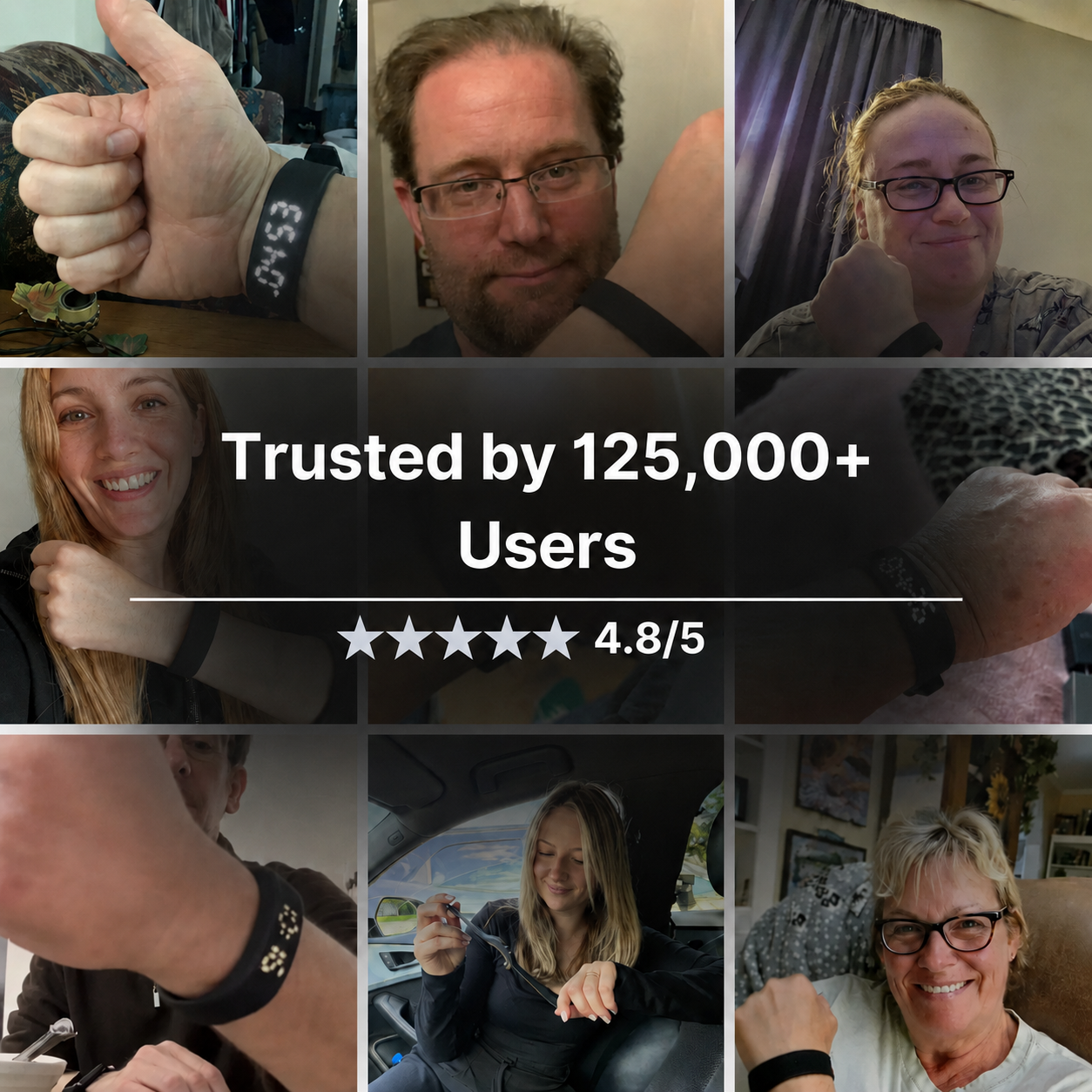
What Real Customers Are Saying
Frequently Asked Questions
Yes. Fitness watches use small notification motors designed for daytime taps — a text message, a step goal. Those buzzes are strong enough to feel during the day but often too weak or too sudden to work as a wake-up alarm for a sensitive sleeper.
Taptora uses a purpose-built wake motor with a progressive ramp. It starts below your notice threshold, then builds slowly in measured stages until you're awake. Many of our customers came to us after trying Apple Watch and Fitbit alarms that either startled them awake or didn't wake them at all.
Neither problem happens with Taptora, because the vibration doesn't start at full strength.
It begins below the threshold your body would notice, then increases slowly in measured stages. Your nervous system meets the signal instead of getting slammed by it. You wake up gently, not jolted.
It's specifically designed for people whose brains treat sudden alarms as physical pain — not for people who need something loud enough to break through deep sleep.
Taptora was built for you specifically.
Traditional alarms fail sensory-sensitive people because their notice threshold and pain threshold sit right on top of each other. A normal alarm crosses both at the exact same instant. That's what causes the jolt, the headache, and the twenty minutes of adrenaline every morning.
Taptora's progressive vibration approaches your waking line instead of leaping across it — giving your nervous system time to transition without triggering a threat response. Many of our customers describe it as the first alarm they've ever tolerated.
No. Taptora has two physical buttons directly on the band. Set the time, put it on, go to sleep.
No account. No bluetooth pairing. No notifications. No phone required in your bedroom at all. This was intentional. Many of our customers explicitly don't want their phone near their bed — for sleep quality, mental health, or sensory reasons.
No. The signal stays on your wrist.
There is no sound at all — not a beep, not a chime, not a vibrating phone rattling on a nightstand. Partners, kids, and roommates keep sleeping through your wake-up.
This is one of the most common reasons customers switch to Taptora. They were tired of feeling guilty about waking the household every morning — and still getting the jolt anyway.
Yes. Because Taptora delivers its signal through direct contact with your wrist, it works regardless of ambient noise, earplugs, white noise machines, or bedroom soundproofing.
Many customers who sleep with earplugs choose Taptora specifically because it's the only alarm they can actually rely on.
The battery lasts multiple days on a single charge, depending on how many wake-up cycles you use per day.
Charging is done via a standard USB cable that plugs directly into the band. Nothing to lose, nothing proprietary to replace. Unlike a smartwatch, you don't need to plan your sleep around when to charge it — and there's no risk of your alarm silently dying overnight.
Yes. Every Taptora comes with a 60-night risk-free trial.
Try it for a full 60 nights. If it doesn't change how you go to bed and how you wake up, send it back for a full refund. No restocking fees. No questions.